 SILENT SERVICE ADVOCACY

You trusted the military with your life once. Are you going to trust the system with your future?
The 30-Year War — Richard Markow’s account of the silent service and the last mile home.
On a Saturday morning in May of 1988, I drove down out of Pacific Palisades, above Pearl City, to file my first disability claim.
The car I took was a Toyota Corolla, a ’72 or maybe a ’74, burnt orange where the paint hadn’t faded, rust where it had. Three or four of us shared it. One of the guys had picked it up cheap, then left the island, or left the Navy, or gone on deployment. I never knew which. It ran. The keys were there. In Hawaii, in those days, that was all a Toyota needed.
There was no internet in 1988. No number to call, no website with the forms. What you knew about disability claims was what other sailors told you, and what other sailors told you was mostly guesswork. I’d been talking with my buddies for weeks about my injuries and about applying. Somebody knew somebody. A couple of days earlier, I’d called an attorney and set up the Saturday appointment.
Finding him was its own operation. No GPS. You drove in and out of Pearl City parking lots, hunting street numbers, and when I found the right building, I still couldn’t find him, because his office was around the back, up a set of stairs, the door facing the mountain. Nobody at reception. Bankers boxes against the wall. A single bulb in the ceiling and a fan that shook the light a little as it turned.
I called out. He came from the back trailing smoke — a chain smoker, ashtray full of butts — past more boxes. I found out much later that those boxes were his entire career. He never threw out a file. When he died, around 2002, somebody going through his storage unit found my records and called to ask if I wanted them. I said sure. Why not. I still have them.
I walked into that office at twenty-three years old with a medical record two inches thick. A month before, I’d gone face first into the window frame of a convertible when a driver ran a light on Kamehameha Highway. My nose had been rebuilt. My left knee had lost its meniscus. Surgeons had already been back into my face four or five times, cutting the scars open and closing them smaller. Somewhere in the folder was an EEG from Tripler, the Army hospital, documenting the one injury nobody could see.
I thought I would fill out some forms and start getting compensated in a few weeks. That is the full extent of what I thought. Everything was documented: the accident on the night it happened, the Army hospital that diagnosed me the same day, and every surgery after. The way I understood the world at twenty-three, the government was a machine, and machines run on documentation. A: The injury. B: The rating. C: The compensation.
The VA wasn’t supposed to be working against my interests. Why would it be?
The attorney didn’t know the process. Neither did I. Looking back, I’m not sure anybody who touched my file did. So we did the 1988 version of due diligence: we sent letters to everybody. The Naval Personnel Center. The Department of the Navy. And, one among many, the Veterans Administration. The answers came back over the following months, to a house on the other side of the continent, into a pile of mail I wouldn’t open until Thanksgiving.
I went through it the way you go through junk mail, because most of it was junk mail. Not eligible for a pension. Set it aside. Not eligible for a medical discharge. Set it aside. Then: your claim has been denied.
What the fuck?
I kept digging and found the reason two envelopes deeper, in a letter dated September. The VA had scheduled me for an examination in Hartford. The date had come and gone while I was still driving home across the country. I hadn’t appeared, so I’d been denied. Failure to appear.
Understand what they were asking. I had three-quarters of an inch of doctors’ reports out of Hawaii, from an Army hospital that diagnosed me the day of the accident and from the specialists who rebuilt my face in the months after. What was I going to add by standing in a room in Hartford? I must have said it out loud a dozen times that winter. What do you need me for? I couldn’t tell an examiner one thing that wasn’t already in the file.
I didn’t get rated at one hundred percent, permanent and total, until April of 2018.
September 1988 to April 2018. Thirty years, give or take a season.
This book is about those thirty years.
Trained to suffer in silence. How is that training serving you now?
For too many who served, the hardest stretch comes last — the final mile of a claim, where records don’t connect, pages go missing, and years pass without an answer. Silent Service Advocacy, a Velo Intelligence company, is an education and technology platform that helps submariners and their families understand that process and organize what matters, citing the VA’s own public sources. We don’t file your claim, and we don’t promise an outcome. We help you see the next step clearly.
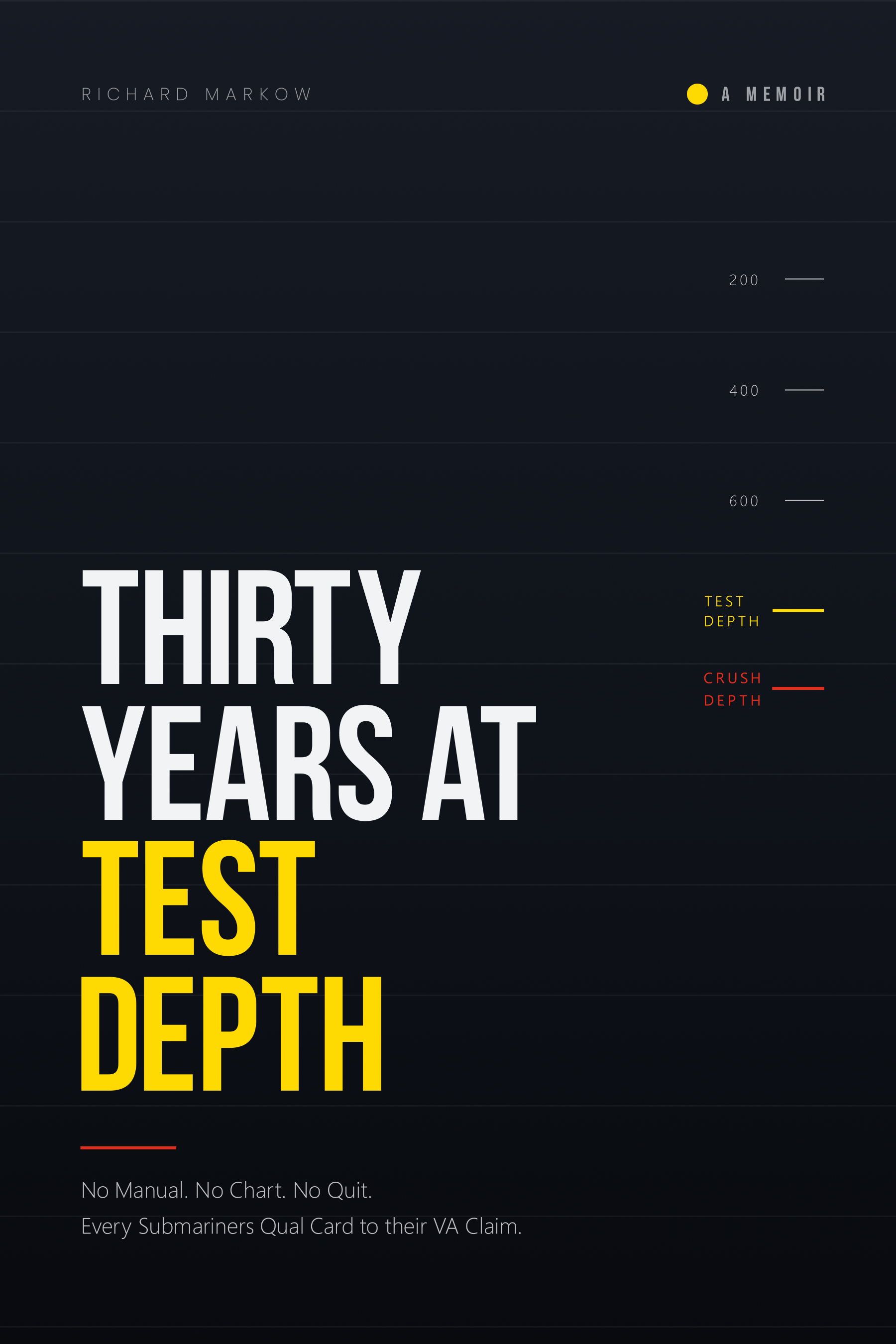
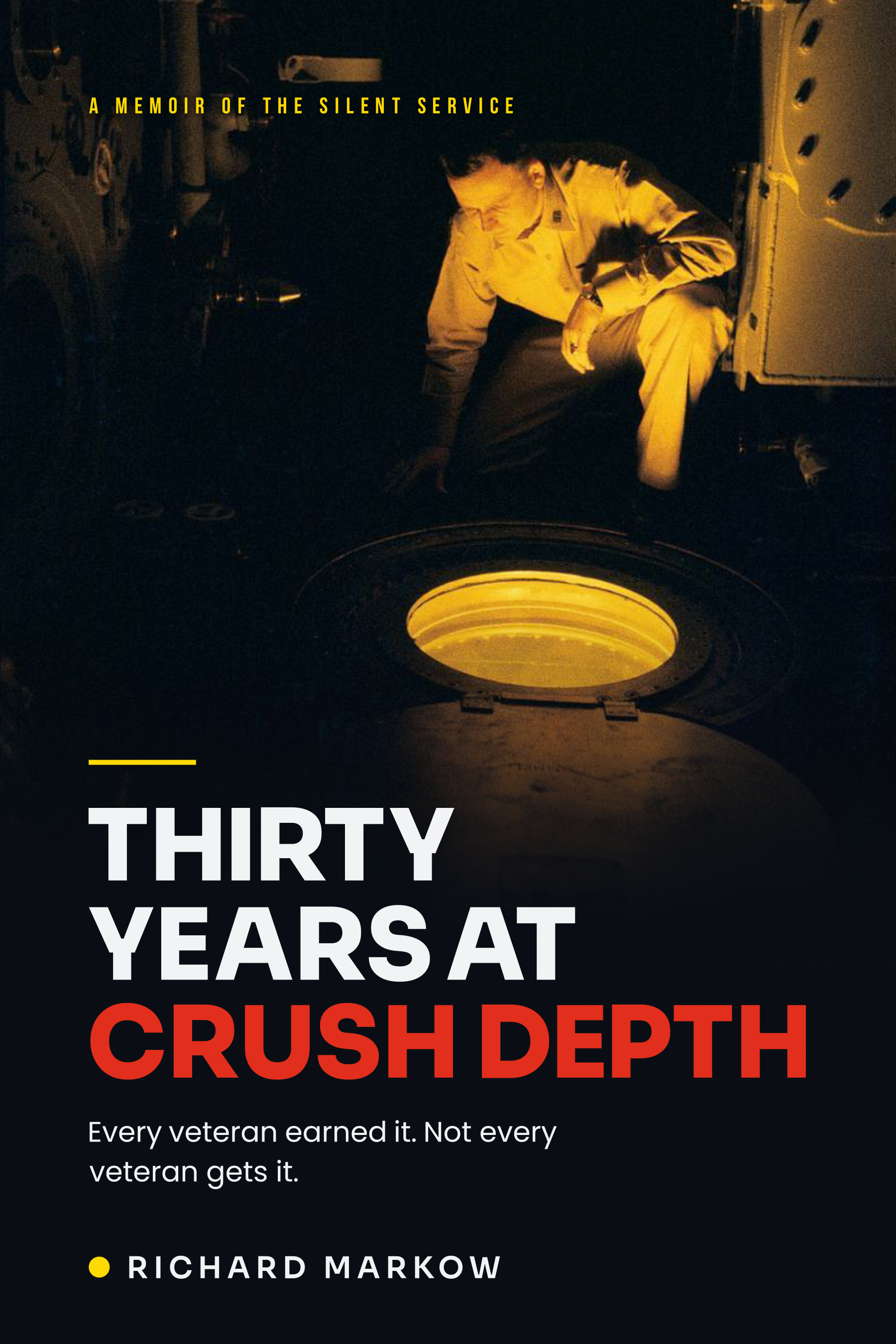
A true story, told so it’s finally heard.
The 30-Year War follows the men of the silent service from the depths to the waiting rooms — the decades-long fight to have what happened to them acknowledged, and the process one of them built to end it. It is the first in a series of true accounts, each written for the community it belongs to.
Two covers are in the running, and the men who lived it get the vote. Choose the cover that ships →
“For every man who served in silence — and came home to a war no one saw.”
You served. Shouldn’t you help choose how it’s remembered?
Two covers are in the running. Cast your vote, tell us what moves you, and — if you’d like — put your name down for the pre-launch and the group of thirty. It takes a minute.
Thank you — your vote is in.
We’ll be in touch about the launch. Here’s where the community stands so far.
Before the book reaches a hundred thousand submariners, it gets tested by thirty.
Thirty submariners — strangers, not friends — will walk the process the way it’s laid out in the book, with coaching, and say plainly what worked and what didn’t. Out of those thirty comes a better process for the next three thousand.
Details will be announced through the same channels you found this page — the boat pages, the veterans’ groups, the places submariners talk to each other.
If the current rules guarantee you lose, why keep playing by them?
The story leads; the technology follows. Submariners are the first community we walk with — the first of many. The 30-Year War is where that begins.
Read it first. Walk with us.
Register your interest in the launch of The 30-Year War. No cost, no pressure — we’ll reach out when it’s ready.
Stories this heavy are handled with care.
Safe Harbor by design
We operate strictly as an education and technology provider — never as your representative.
Your data stays in the U.S.
Stored and processed on U.S. infrastructure, with sensitive records quarantined by design.
HIPAA-grade controls
Health-adjacent information is handled to a HIPAA-grade standard, universally, by default.
The VA’s own sources
Guidance cites public VA regulations and processes — so you can check every word.
The honest answers first.
Who is The 30-Year War for?+
Submariners, their families, and anyone who served in the silent service. It’s written for the community first — and for everyone who wants to understand what coming home really costs.
When can I read it?+
The manuscript is in final drafting. Register your interest and we’ll tell you the moment it’s available — you’ll be among the first.
How do I join the thirty?+
Before wide release, thirty submariners will test the process laid out in the book and tell us plainly what worked. Selection details will be announced through the same channels you found this page. Registering for the launch is the best way to hear about it first.
Can I help choose the cover?+
Yes. Two covers are in the running and the community decides. Cast your vote under Choose the cover — and, if you’d like, put your name down for the pre-launch and the group of thirty in the same step.
Does registering cost anything?+
No. Registering is free, and we’ll only reach out about the launch. No spam, no noise.
Is the book — or Silent Service Advocacy — legal advice?+
No. Silent Service Advocacy is an education and technology platform. Nothing here is legal advice, and we don’t file claims or guarantee outcomes. When representation is the right next step, we can point you toward accredited professionals.
Is my information safe?+
Your data is stored and processed in the U.S. with HIPAA-grade controls, and sensitive records are quarantined by design.